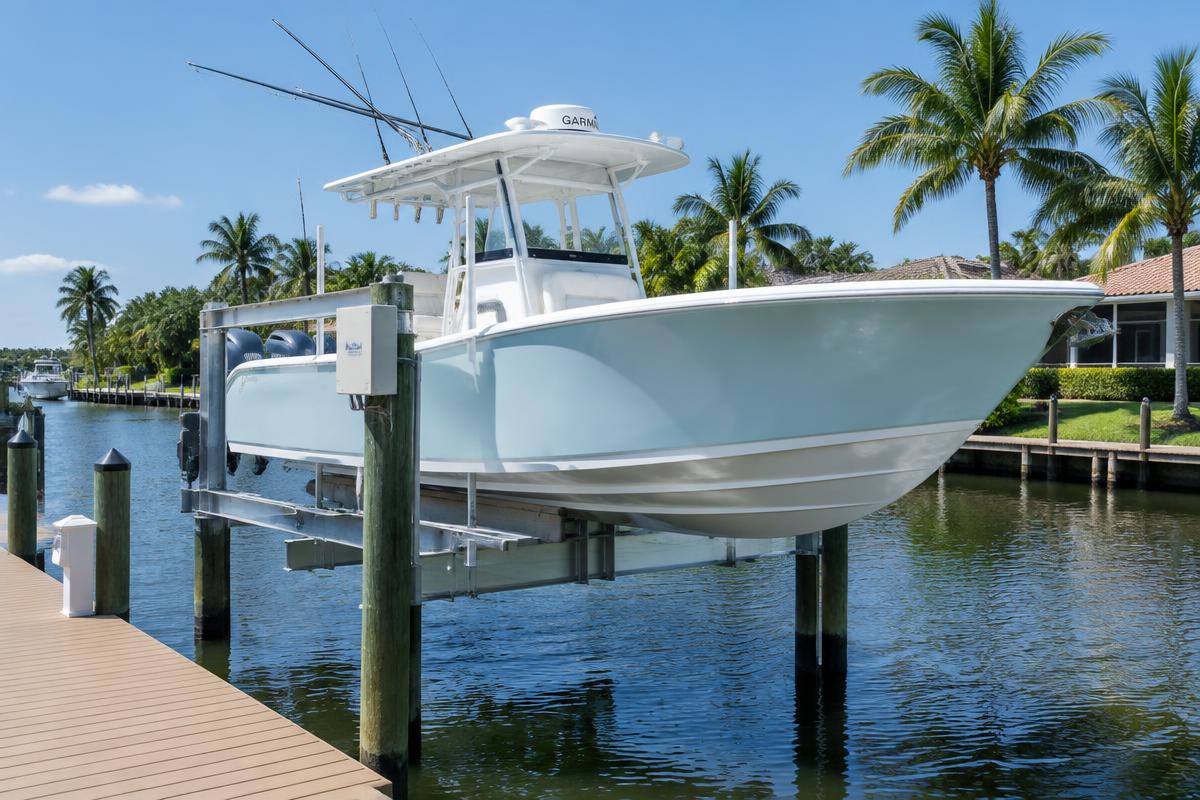
Choosing the Right Boat Lift
Lift selection starts with your boat: weight, length, beam and hull shape. Then comes the site — water depth, tidal range, dock layout and the condition of the seawall and pilings the lift will rely on.
Capacity should account for fuel, gear and water in the boat, not just the dry weight on the spec sheet.
Good Times to Add or Upgrade a Lift
New or bigger boat
Your current lift may not have the capacity.
New dock
Designing the lift into dock construction from day one.
Tired of bottom cleaning
Getting the hull out of the water reduces growth.
Storm preparedness
Lifts can help, though every storm plan should be specific to your property.
Common Lift Types
Elevator lifts
Mounted to the seawall — popular on South Florida canals where space is tight.
Four-post and piling-mounted lifts
Supported by marine pilings, suited to a range of boat sizes.
Floating lifts
Common for personal watercraft and smaller boats.
Not sure what your boat lift needs?
Tell us what you're seeing. We'll help you get connected with a marine professional for an evaluation.
Check the Structure First
A lift puts concentrated loads on your seawall or pilings. If the wall is aging, a seawall inspection before installation is worth it.
Lifts in South Florida Conditions
Marine-grade aluminum and stainless components hold up best in salt water. Electrical work should meet local code and be protected from high water.
We work with property owners across Broward, Miami-Dade and Palm Beach counties.
Boat Lift Installation FAQs
What size boat lift do I need?
Choose capacity above your boat's fully loaded weight. A professional can help match lift type and capacity to your boat and site.
Can a lift go on my existing seawall?
Often, if the wall is in good condition and designed to handle the load.
Do boat lifts need permits?
In many South Florida municipalities, yes.