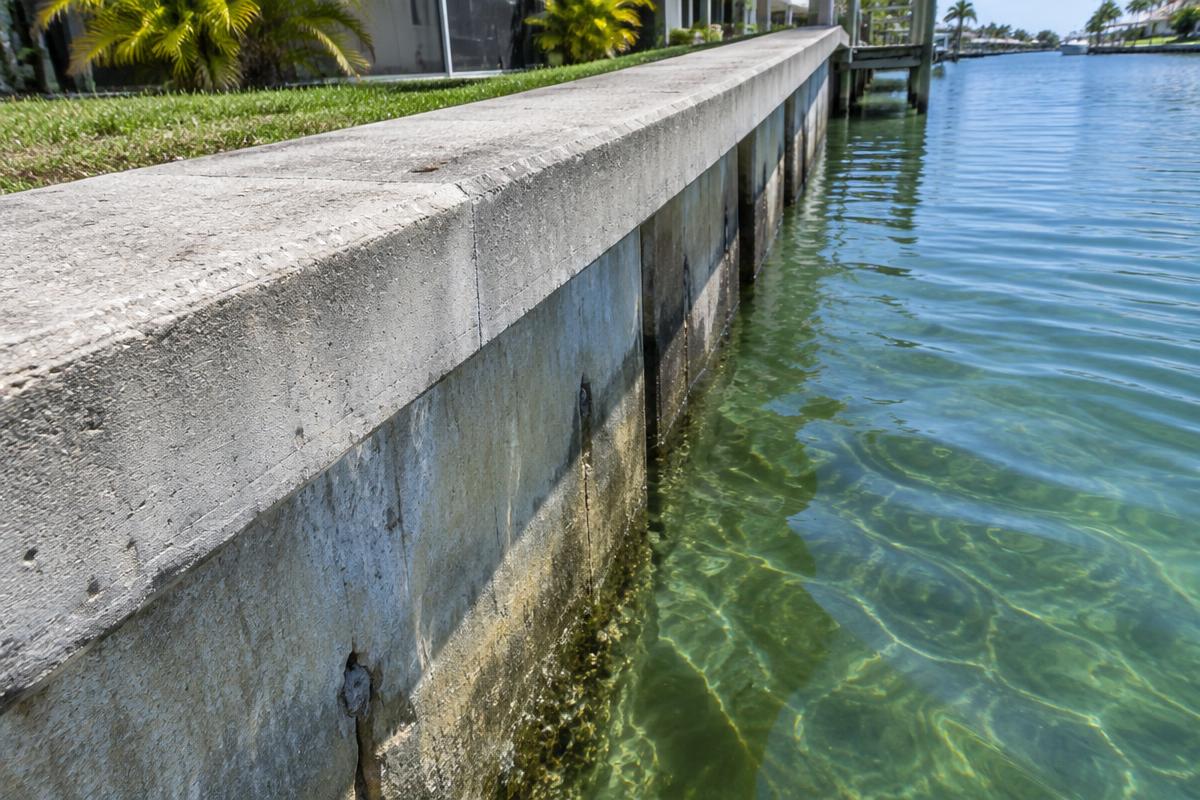
What Seawall Stabilization Means
Stabilization is about restoring the wall's ability to resist soil and water pressure. When a wall rotates outward, bows in the middle, or settles unevenly, the original anchoring system is usually no longer doing its job.
The fix typically involves new anchoring — helical tiebacks, new deadmen, or other structural reinforcement — often combined with filling voids and sealing joints so the soil behind the wall is supported again.
Signs of a Seawall That's Moving
Visible lean toward the water
Compare the top of the wall to a straight line — rotation is easier to see from a boat or the neighbor's dock.
Cap cracks running along the wall
Long cracks on the top of the cap can indicate the wall is rotating.
Separation from the yard or pool deck
A widening gap behind the cap means the wall is moving away from the land.
Misaligned panels
Panels stepping out of line with each other suggest uneven movement.
Stabilization Methods
Helical tiebacks
Screw-in anchors installed through the wall into stable soil behind it.
New deadmen and tie rods
Replacing or supplementing the original anchoring system.
Void filling and joint sealing
Restoring soil support behind the wall. Related: seawall erosion repair.
Toe reinforcement
Riprap or other measures where scour at the base is contributing to movement.
Not sure what your seawall needs?
Tell us what you're seeing. We'll help you get connected with a marine professional for an evaluation.
Timing Matters With Stabilization
Stabilization works best while the wall is still structurally sound and only moderately displaced. Once a wall has rotated significantly or the panels are badly deteriorated, seawall replacement may be the more reliable path.
If you suspect movement, a seawall inspection can measure it and help establish whether it's ongoing.
Why Walls Move Here
Heavy rain saturates soil behind the wall and increases pressure, while low tides reduce the water pushing back from the other side. Add corroded tie rods on older walls and movement becomes more likely.
Loads matter too — pools, driveways and equipment near the wall all add pressure.
We work with property owners across Broward, Miami-Dade and Palm Beach counties.
Seawall Stabilization FAQs
Can a leaning seawall be straightened?
Usually the goal is to stop further movement rather than push the wall back to vertical. In some cases, partial correction may be possible — it depends on the wall's condition.
Is stabilization cheaper than replacement?
It's often less expensive, but it's only a good value if the wall has enough remaining life to justify it.
What causes tiebacks to fail?
Corrosion of steel tie rods over time is a common cause, along with soil loss around the anchors.