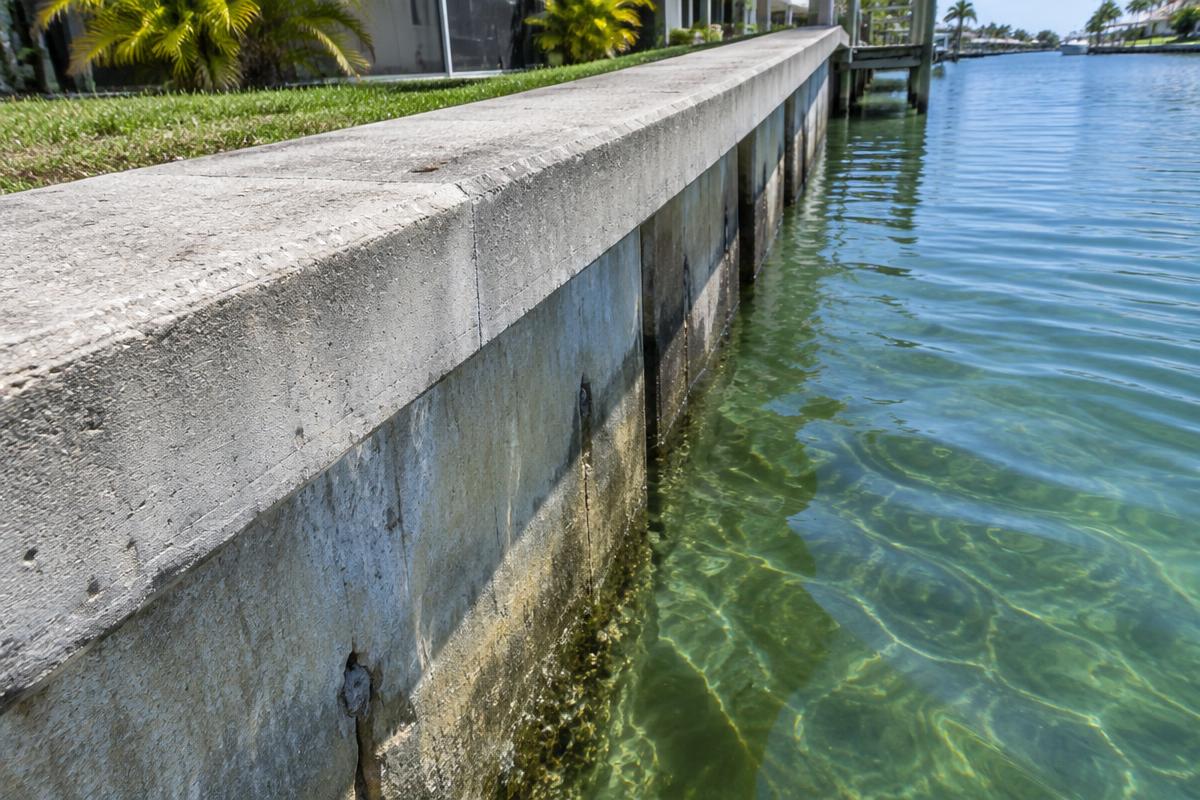
What a Seawall Inspection Looks At
A thorough inspection looks at the full system, not just the cap. That includes the face of the wall, joints between panels, the cap, tiebacks where visible, the yard behind the wall, and conditions at the toe along the waterway bottom.
Depending on the property, that can include walking the wall at low tide, probing the soil behind it for voids, and checking alignment along the length of the wall.
The outcome should be a straightforward summary: what's fine, what should be monitored, and what needs attention now. We walk through the process step by step in what happens during a seawall inspection.
Good Reasons to Schedule an Inspection
You're buying or selling
A seawall issue can be one of the most expensive surprises on a waterfront closing.
You've noticed soil loss or cracks
Get the cause identified before deciding on a fix.
After a major storm
Surge and wave action can loosen joints and scour the toe of the wall.
Before building a dock or lift
New loads on an aging wall deserve a second look first.
Association reserve planning
Condos and HOAs need condition data to budget responsibly.
What Can Come Out of an Inspection
No action, just monitoring
Many walls are in fair shape and simply need a periodic check.
Targeted repair
Localized problems that can be handled with seawall repair or cap repair.
Stabilization
Reinforcing a wall that's moving with seawall stabilization.
Replacement planning
When the wall is near the end of its life, a roadmap for seawall replacement.
Not sure what your seawall needs?
Tell us what you're seeing. We'll help you get connected with a marine professional for an evaluation.
When an Inspection Can't Wait
If you see a new sinkhole, water pouring through a joint, or the wall visibly moving, treat it as a priority. Those are signs of active failure, not wear.
For everything else, a regular inspection cadence — and an extra one after significant storms — is a sensible way to protect the property.
Inspection Requirements in South Florida
Some South Florida municipalities have adopted seawall condition or elevation requirements, and condo associations face increasing scrutiny of structural components. Requirements differ by city, so confirm what applies to your property.
Tide timing matters here. Inspecting at low tide exposes more of the wall face and makes joint problems easier to spot.
We work with property owners across Broward, Miami-Dade and Palm Beach counties.
Seawall Inspection FAQs
How often should a seawall be inspected?
A periodic inspection is a good baseline, with additional checks after major storms or whenever you notice changes like soil loss or new cracks.
Can I inspect my own seawall?
You can and should keep an eye on it — look for sinkholes, cracks, gaps and lean. A professional inspection adds below-waterline checks and experience interpreting what you're seeing.
Should I get a seawall inspection before buying a waterfront home?
It's strongly worth considering. A general home inspection typically doesn't evaluate the seawall in depth.
Does an inspection include the dock?
It can. Since docks and seawalls are connected, many owners have both evaluated together.