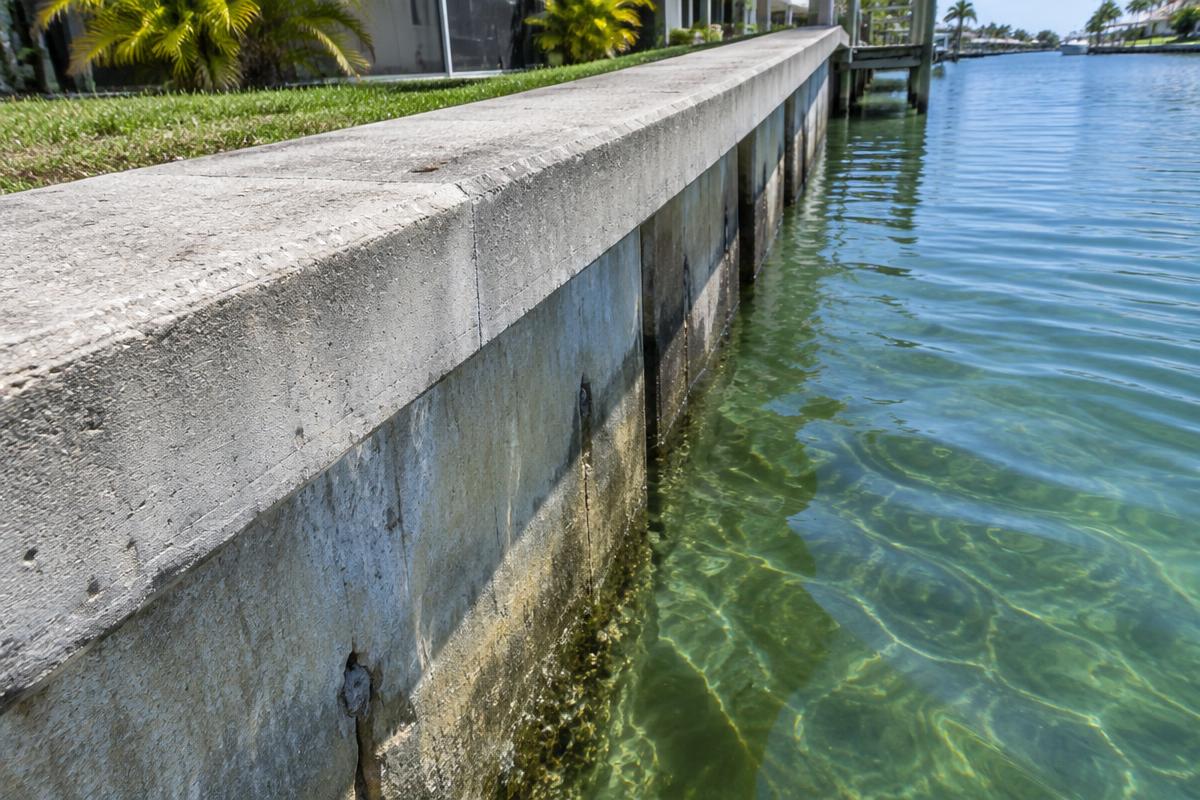
How Erosion Behind a Seawall Happens
Every tide moves water in and out through any gap in the wall. When that water leaves, it carries fine soil with it. Over time, that creates voids behind the wall — empty pockets that eventually collapse into visible sinkholes.
Seawall erosion repair tackles both sides of the problem: sealing the path water is using, and refilling the voids that have already formed. We go deeper in what causes soil erosion behind a seawall.
Signs of Soil Loss Behind Your Wall
Sinkholes or soft spots
Ground that feels spongy or dips near the wall.
Settling pavers or pool deck
Hardscape near the water that's sinking or cracking.
Sand at the toe of the wall
Visible sediment piling up on the waterway side.
Gaps under the cap
Open space between the bottom of the cap and the soil.
Erosion Repair Methods
Polyurethane or grout injection
Filling voids and sealing joints from behind the wall.
Filter fabric
Installing geotextile behind joints so water passes but soil doesn't.
Joint repair
Sealing the gaps between panels where most washout starts.
Backfill and restoration
Replacing lost soil and restoring the yard once the source is fixed.
Not sure what your seawall needs?
Tell us what you're seeing. We'll help you get connected with a marine professional for an evaluation.
Don't Just Fill the Hole
Filling a sinkhole with topsoil hides the problem without fixing it. The water path is still there, and the void usually comes back — often larger.
If erosion is paired with lean or cracking, the wall may need stabilization or broader seawall repair as well.
Erosion and South Florida Tides
King tides and summer downpours are a rough combination for aging walls. High water pushes in, heavy rain saturates the yard, and every cycle pulls a little more material through open joints.
Sandy soils common across coastal South Florida move easily once a path opens.
We work with property owners across Broward, Miami-Dade and Palm Beach counties.
Seawall Erosion Repair FAQs
Is soil erosion behind a seawall dangerous?
It can be. Voids can collapse unexpectedly, and ongoing soil loss can undermine the wall itself and anything built near it.
Can erosion be fixed without replacing the seawall?
Often, yes — especially when the wall is otherwise in reasonable condition and the leaks are localized.
How can I tell where the leak is?
Sinkholes usually form near the leaking joint or crack, but the exact source is best confirmed during an inspection at low tide.