What Seawall Repair Actually Covers
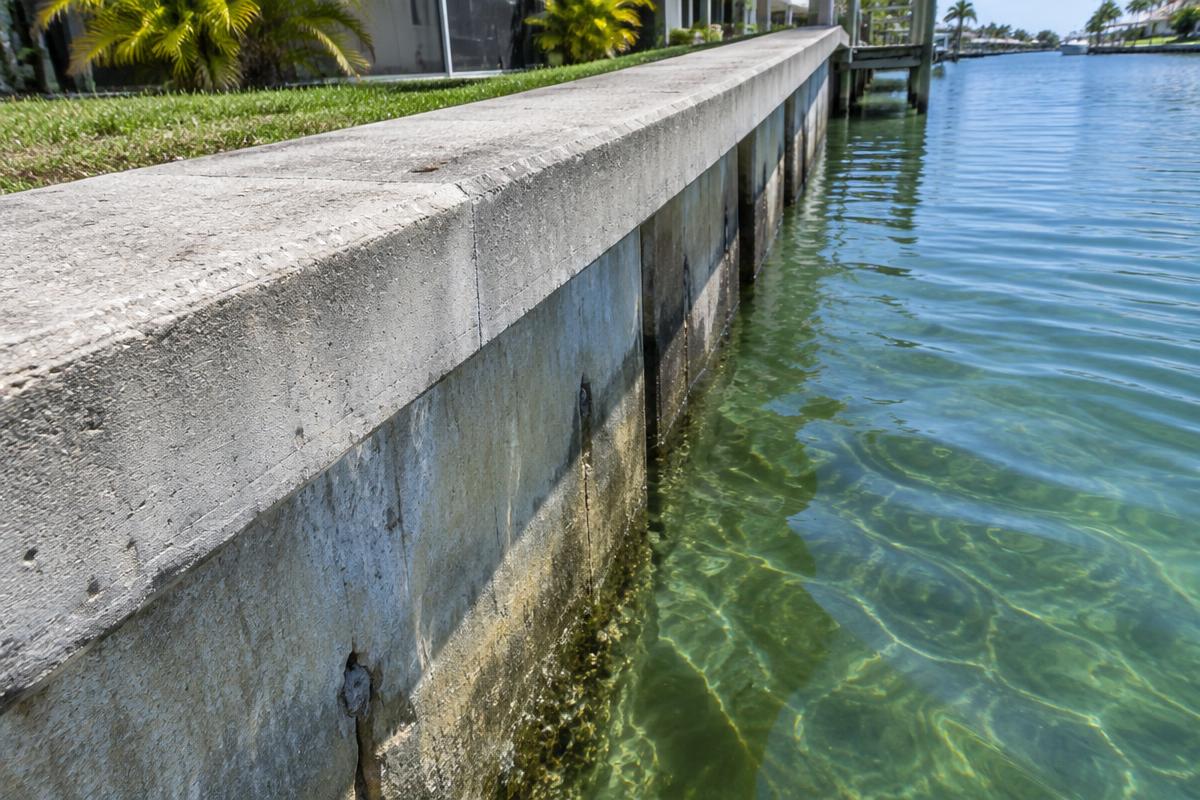
Seawall repair is targeted work. The goal is to fix the part of the wall that's failing — a cracked panel, an open joint, a spalled cap, a corroded tieback — while the rest of the structure still has useful life left.
Most repairs fall into a few buckets: sealing joints and cracks so soil stops washing through, filling voids behind the wall, restoring or replacing sections of the cap, and reinforcing areas where the wall has started to rotate or bow.
The right repair depends on what's causing the problem. That's why a good seawall inspection usually comes first. Patching a symptom without understanding the cause is how owners end up paying twice.
Signs Your Seawall Needs Repair
Some of these are cosmetic. Others mean water is actively moving soil out from behind your wall.
Depressions or sinkholes in the yard
Dips near the wall usually mean soil is escaping through a joint or crack below the waterline.
Cracks in panels or the cap
Hairline cracks can be monitored. Wider cracks, especially with rust staining, point to corroding steel inside the concrete.
Gaps between panels
Open joints let sand wash out with every tide. It's one of the most common drivers of soil loss.
Leaning or bowing
A wall that's tilting toward the water may have tieback or anchor problems and deserves prompt attention.
Muddy water after a tide
Cloudy water along the face of the wall at low tide can indicate fines leaking through.
Common Seawall Repair Approaches
Joint and crack sealing
Filter fabric, injected grout or polyurethane sealing to stop material from migrating through the wall.
Void filling
Pressure-injected grout or foam to fill cavities behind the wall and restore support under the yard.
Cap repair or replacement
Rebuilding damaged caps to tie panels together and protect the top of the wall. See seawall cap repair.
Tieback and anchor work
Adding or replacing tiebacks and deadmen to resist further movement — part of seawall stabilization.
Panel or section repairs
Localized concrete restoration or new sections where one part of the wall has failed.
Not sure what your seawall needs?
Tell us what you're seeing. We'll help you get connected with a marine professional for an evaluation.
When to Get a Professional Evaluation
If you're seeing active soil loss, a new sinkhole, or any movement in the wall, don't wait for the next king tide to see what happens. Those issues tend to accelerate.
If the wall is older, has been patched several times, or is failing in multiple places, it's worth getting an honest opinion on seawall repair vs. replacement before putting more money into it.
Why South Florida Seawalls Take a Beating
Salt water, daily tides, heavy summer rain and storm surge all work on the same structure. King tides push water higher than normal, and saturated soil behind the wall adds pressure from the land side.
Many canal-front neighborhoods in Broward, Miami-Dade and Palm Beach were built decades ago, and a lot of those original walls are reaching the end of their design life at the same time.
Local municipalities may also have seawall height or condition requirements. Rules vary by city, so it's worth confirming what applies to your property.
We work with property owners across Broward, Miami-Dade and Palm Beach counties.
Residential and Commercial Seawall Repair
Single-family homes
Protecting the yard, pool deck and dock connection from ongoing soil loss.
Condos and HOAs
Long runs of shared wall where planning, budgeting and phasing matter as much as the repair itself.
Commercial and marinas
Walls that support parking, buildings or heavy use and can't afford unexpected downtime.
Seawall Repair FAQs
How do I know if my seawall can be repaired instead of replaced?
If the problems are localized — a few joints, one damaged section, a cap in rough shape — repair is often reasonable. Widespread cracking, severe corrosion or significant movement along the wall usually shifts the conversation toward replacement. An inspection is the way to know.
Is a small sinkhole behind the seawall urgent?
It should be looked at soon. A sinkhole means material is leaving from behind the wall, and the void underneath is usually larger than what you see on the surface.
Do seawall repairs require permits?
Many do, depending on the scope and the municipality. The professional handling your project should confirm permitting requirements for your specific city and county.
How much does seawall repair cost?
It depends on access, the type of damage, wall length and materials. We break down the main cost drivers in our guide on seawall repair cost in South Florida.