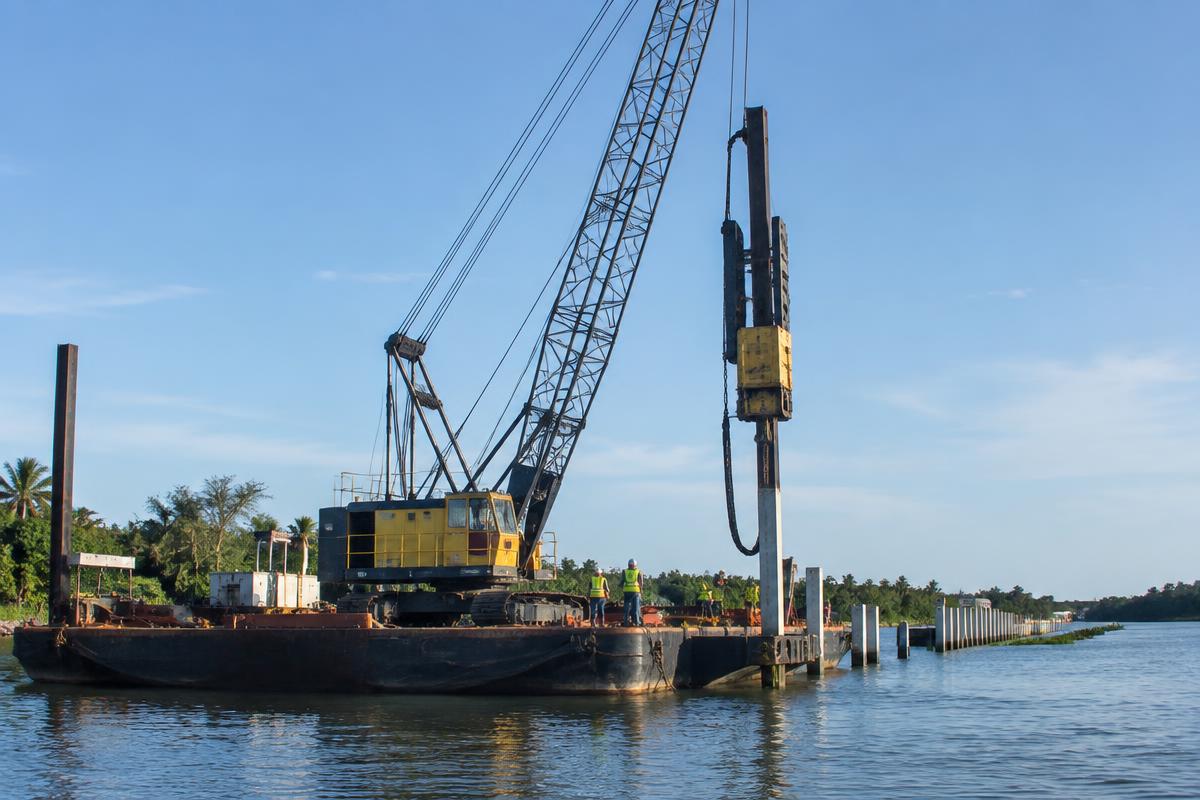
What Marine Pilings Do
Pilings transfer the weight of docks, boat lifts, piers and other structures down into stable soil beneath the waterway. They also resist lateral forces from boats, waves and wind.
Common materials include pressure-treated wood, precast concrete and composite or fiberglass-reinforced pilings. Each performs differently in salt water.
Signs of Piling Damage
Thinning at the waterline
Wood pilings often erode where they're alternately wet and dry.
Cracks or spalling
Concrete pilings with exposed or rusting reinforcement.
Leaning
Pilings out of plumb or moving under load.
Marine borer damage
Holes and channels from organisms that attack wood.
Piling Solutions
New piling installation
Driving or jetting new pilings for new structures.
Piling wraps and jackets
Protecting or restoring existing pilings.
Piling replacement
Removing and replacing failed pilings under an existing dock.
Sister pilings
Adding a new piling alongside a weakened one.
Not sure what your project needs?
Tell us what you're seeing. We'll help you get connected with a marine professional for an evaluation.
Don't Ignore a Bad Piling
One failed piling shifts load onto its neighbors. If you're seeing damage, get it looked at before it turns into dock replacement.
Pilings in South Florida Water
Warm salt water supports aggressive marine growth and borers. Material selection and protection strategies matter more here than in many other regions.
We work with property owners across Broward, Miami-Dade and Palm Beach counties.
Marine Piling FAQs
What type of piling lasts longest in salt water?
Concrete and composite pilings generally resist marine conditions well. Wood can be cost-effective but typically needs protection.
Can pilings be replaced without removing the dock?
Often, yes — though it depends on access and dock design.
What is a piling wrap?
A protective barrier installed around a piling to shield it from marine borers and deterioration.