What Goes Into a New Seawall
Seawall construction starts with design. Wall height, embedment depth, sheet pile material, cap dimensions and the anchoring system all depend on soil conditions, water depth and the loads the wall needs to carry.
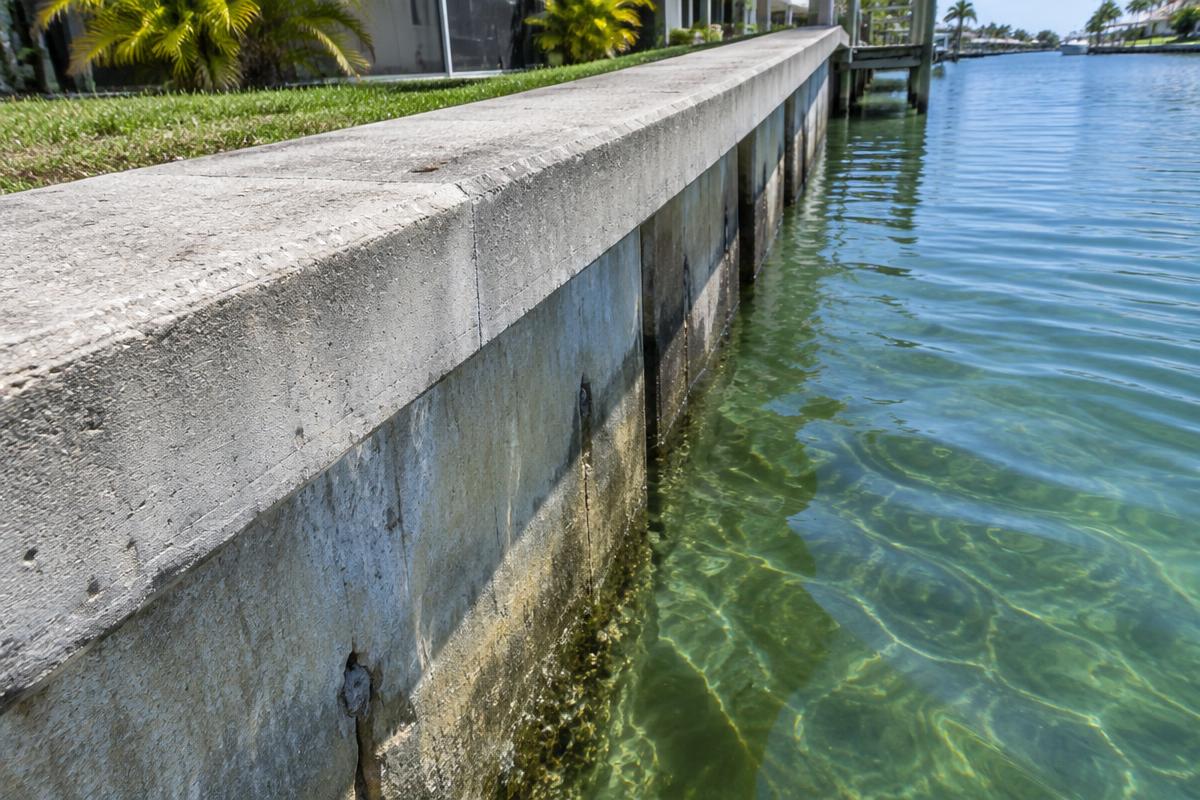
The main components are the sheet piles driven into the waterway bottom, a reinforced concrete cap that ties them together, and a tieback system anchored into the land behind the wall.
New construction is also the easiest time to plan how the wall will connect with a future dock, boat lift or other waterfront construction.
Projects That Typically Need a New Seawall
New waterfront homes
Tear-down and rebuild projects often include a new wall designed to current standards.
Unprotected or natural shorelines
Properties dealing with ongoing erosion where a structure is permitted.
Redevelopment and commercial sites
New buildings, parking or marina facilities that need a wall designed for heavier loads.
Raising the waterfront
Owners who want a higher cap elevation for resilience.
Design and Material Choices
Sheet pile material
Concrete, vinyl/composite or steel — each has trade-offs in cost, lifespan and load capacity.
Cap design
Cap height and width affect resilience, appearance and how the dock attaches.
Anchoring
Tiebacks, deadmen or batter piles to resist soil pressure from the land side.
Toe protection
Riprap or other toe protection where scour is a concern.
Not sure what your seawall needs?
Tell us what you're seeing. We'll help you get connected with a marine professional for an evaluation.
When to Start the Conversation
As early as possible. Seawall construction usually involves engineered drawings and permits at the local level and sometimes at the county, state or federal level depending on location.
If you're designing a new home, bring the seawall into the conversation before the site plan is locked in.
Building for South Florida Conditions
Rising tide levels and local resilience standards are pushing many new walls higher than their neighbors. Transitions between walls of different heights need attention so water doesn't find a path around the new structure.
Environmental protections for waterways, seagrass and wildlife can also shape where and how a new wall is built.
We work with property owners across Broward, Miami-Dade and Palm Beach counties.
Seawall Construction FAQs
What is the best material for a new seawall in Florida?
There isn't one answer. Concrete, vinyl and steel all perform well in the right application. Budget, water depth, loads and local requirements drive the choice.
Do I need an engineer for a new seawall?
New seawall construction typically requires engineered plans for permitting. The professional you work with can clarify requirements for your location.
What's the difference between a seawall and a bulkhead?
The terms are often used interchangeably. "Bulkhead" is frequently used for walls in calmer waters and canals. See bulkhead repair for more.